
My Predictions for the Pro Photography Trends Unfolding in 2026
Next year will be the most consequential in the last twenty-five.

I help photographers and creative entrepreneurs over 40 reclaim their confidence, cut through the noise, and build bold, independent lives through no-BS insight, experience, and action. Welcome to my Substack.
I am glad you are here.
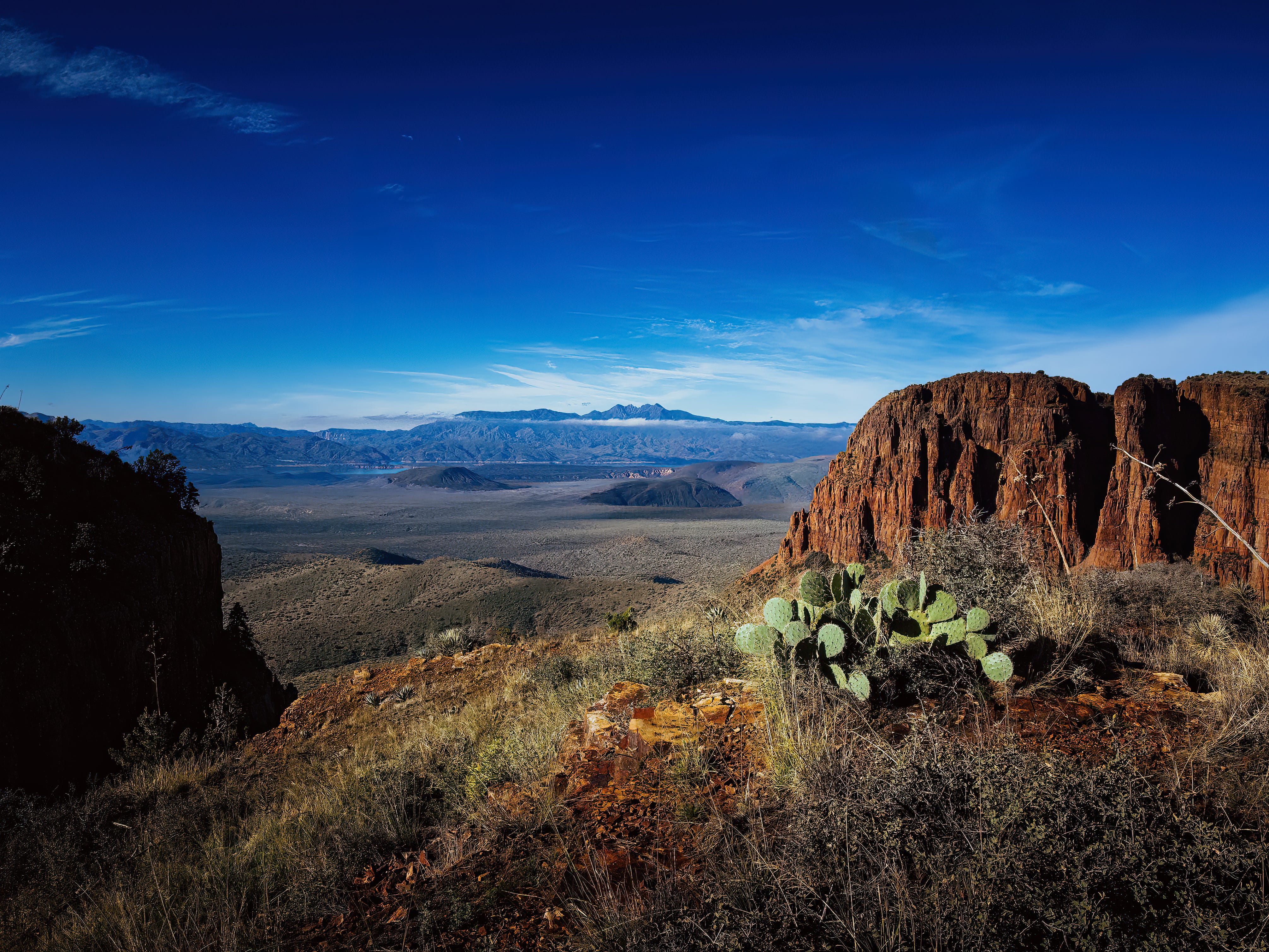
This week’s adventure was to take a day trip up 288 north of Globe, Arizona, to Young, Arizona. Young is a tiny little town with two restaurants, a gas station, and a bunch of ranches.
It’s a great place, but the road up from Roosevelt Lake was spectacular.
I used the trip to spend some time to learn my Insta360 Ace Pro 2. It’s a heck of a camera, and I am loving it. Incredible video, amazing stills.
Of course, ya gotta love wide angles when using these bad boys.
Here is one of the photos from the day.
I now have too many little cameras.
I’m probably not going to do anything about that.
I just wanted to confess it to someone so I could vanquish my guilt.
It’s vanquished.
So next up is the main article:
STOP SELLING PHOTOGRAPHY
That had to stop ya.
They say we have to have a snappy “hook”… well, that’s snappy AND true.
Stop selling photography and start selling visual systems.
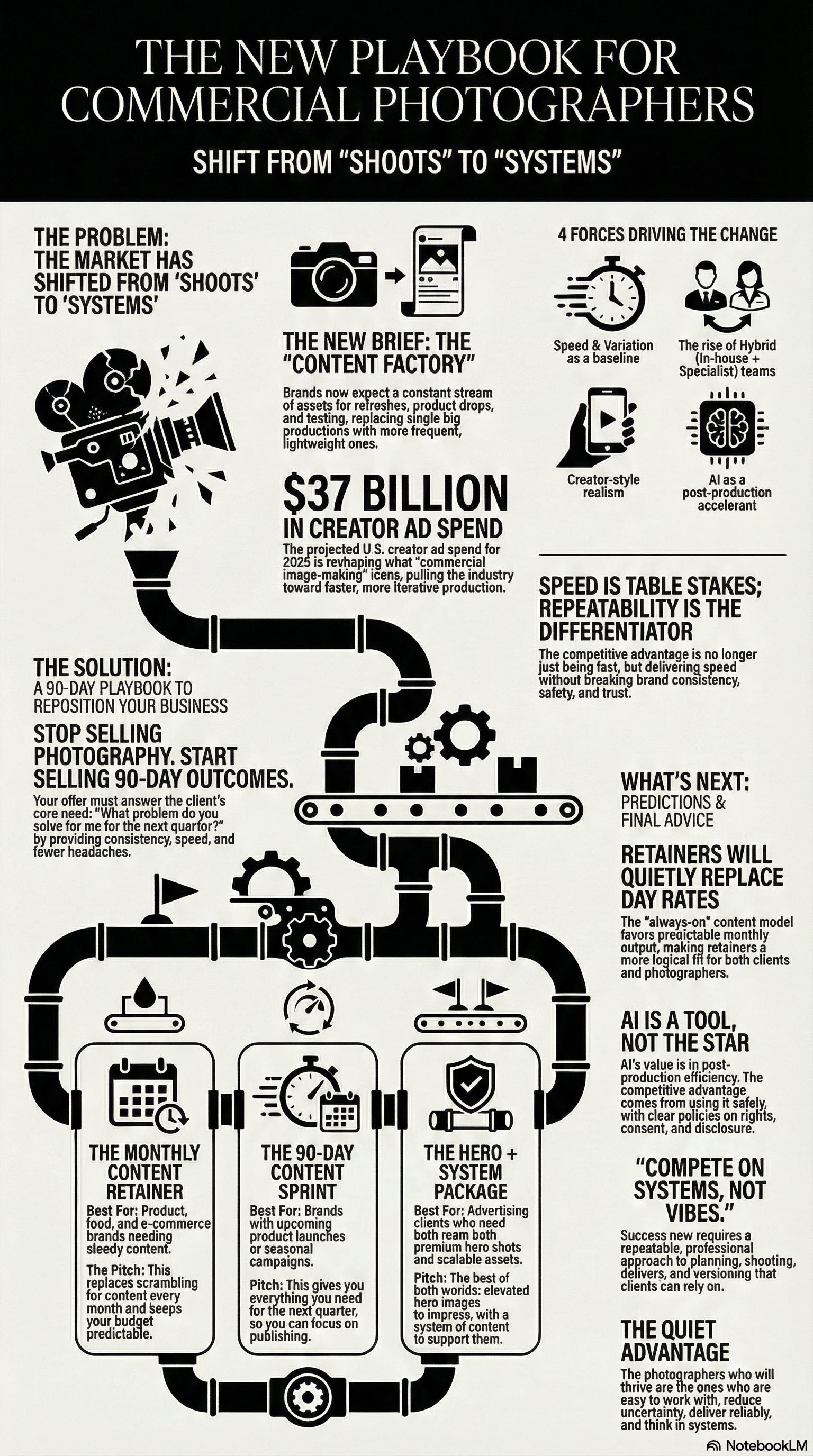
I have been working on this project all week.
(There will be more coming on this topic for those who are genuinely interested.)
2026 will be lit.
It will be dynamic.
It will move at warp speed.
I have done all I can here to give you a roadmap. Use what you can, and know that it is only a prediction… but one based on a lot of research.
Here’s the audio version.
The New Playbook: Key Trends Shaping Commercial Photography in 2026
The Ground Has Shifted
The market has undergone a deep fundamental shift.
The old model, built around “campaigns and craft,” is being replaced by a “content systems” approach.
Brands no longer buy single “shoot days”; they buy repeatable pipelines designed to feed a constant stream of ads, e-commerce, email, PR, retail, and social.
In this article, I have outlined the dominant forces that will reshape the industry over the next 12 months.
I believe it to be essential reading for independent photographers adapting their business, creative directors managing asset pipelines, and brand marketing leads seeking to balance volume with consistency.
1. The Content Factory is Now the Default
Brands are moving from episodic campaigns to “always-on” content streams.
Going forward, a shoot is expected to deliver a high volume of assets, including creator-style cutdowns, vertical, square, and landscape formats, and retargeting variants. All of this to support seasonal refreshes, product drops, and rapid testing.
A key driver of this trend is creator-led advertising.
The IAB projects U.S. creator ad spend will reach $37 billion in 2026, pulling commercial photography toward faster, more iterative production cycles.
This shift fundamentally disrupts the traditional “portfolio pitch.”
Clients are demanding proof of a systemized approach, not just a collection of hero shots.
Speed is no longer a competitive advantage; it is table-stakes… the new baseline.
The expected differentiator is delivering speed without breaking brand consistency.
2. Hybrid Production is the New Standard
The hybrid model will become common practice. Brands are using their in-house teams for speed, creators for distribution-native authenticity, and independent photographers as “modular specialists” for specific, high-leverage assignments.
They act as a lighting specialists for product/beauty, location shooters for specific aesthetics, or a post-production partners for cleanup, post-production, and versioning.
Consequently, the reasons for hiring photographers have changed. The central question is shifting from “Who is the best photographer?” to “Who reduces risk and increases throughput for the team?”
For independents, the change presents obvious possibilities.
The coming year will reward the photographer who can say, “Here’s how we’ll keep your brand’s look consistent for the next 90 days,” not just, “Here’s my portfolio, I shoot great pictures.”
Photographers who package themselves as specialists or production partners who can integrate easily will thrive.
3. AI: An Assistant with Accountability
In commercial photography, AI’s primary role is as a supporting accelerant.
It is an infrastructure tool used for post-production, versioning, background cleanup, and asset repurposing, and not as the main creative force.
Careless AI use has led to public backlash and reputational damage for some brands.
This has forced the industry to create clearer policies around consent, disclosure, and compensation, particularly in sensitive categories like fashion, advertising, and editorial.
In the next year, the advantage lies not in simply using AI but in navigating the future landscape.
This means using it to improve throughput while maintaining brand safety, placing a premium on provenance.
Clients will increasingly ask what’s real versus synthetic.
Becoming a “policy-aware” partner who can advise on safe usage will grant photographers more influence.
How to Position Yourself for the Next 12 Months
The market’s evolution clearly points to several key shifts that will define the coming year.
• Retainers over Day Rates:
Predictable monthly retainers will become more common for independent commercial work as brands seek consistent content output.
• “Asset-Ready” Delivery:
Brands will increasingly require highly organized files with clear naming conventions, metadata, and transparent usage rights to manage high-volume workflows. This may seem trivial, but it is not.
• Editorial as a Look-Book:
Editorial photography will continue to influence commercial aesthetics, but with tighter budgets, its role will shift more toward licensing and branded partnerships.
• Rising Disclosure for AI:
Expect more demand for transparency around the use of AI in post-production, especially in sensitive areas like fashion, beauty, and health.
Success will come to those who:
compete on systems, not simply style;
define their specialized role within a hybrid production team;
and focus on reducing uncertainty for their clients.
Final Takeaway
The market has shifted from buying “shoots” to buying content pipelines.
Independents who sell reliable, 90-day outcomes, not just single deliverables, will find the best opportunities.
A full document and explainer video for my Premium Members below.
Hey, y’all, I would love to do a LIVE Substack to discuss this if there are people interested. Let me know in the comments or by email, and I will prepare a LIVE for the first week in January if there is interest.
37 Billion Dollars…
That is the amount expected to be spent on creative projects in 2026.
That’s photographers, designers, illustrators, writers… You know, creatives.
I’m teaching a class that could help you get a piece of that pie as a photographer. No quitting your day job, no renting a studio, no massive investment… You already have what you need. I call it…
THE PRACTICAL COMMERCIAL PHOTOGRAPHY SIDE HUSTLE
And you can join us in February to start your side hustle in the first quarter of 2025.
It wasn’t possible in 2020, it’s absolutely doable in 2026.
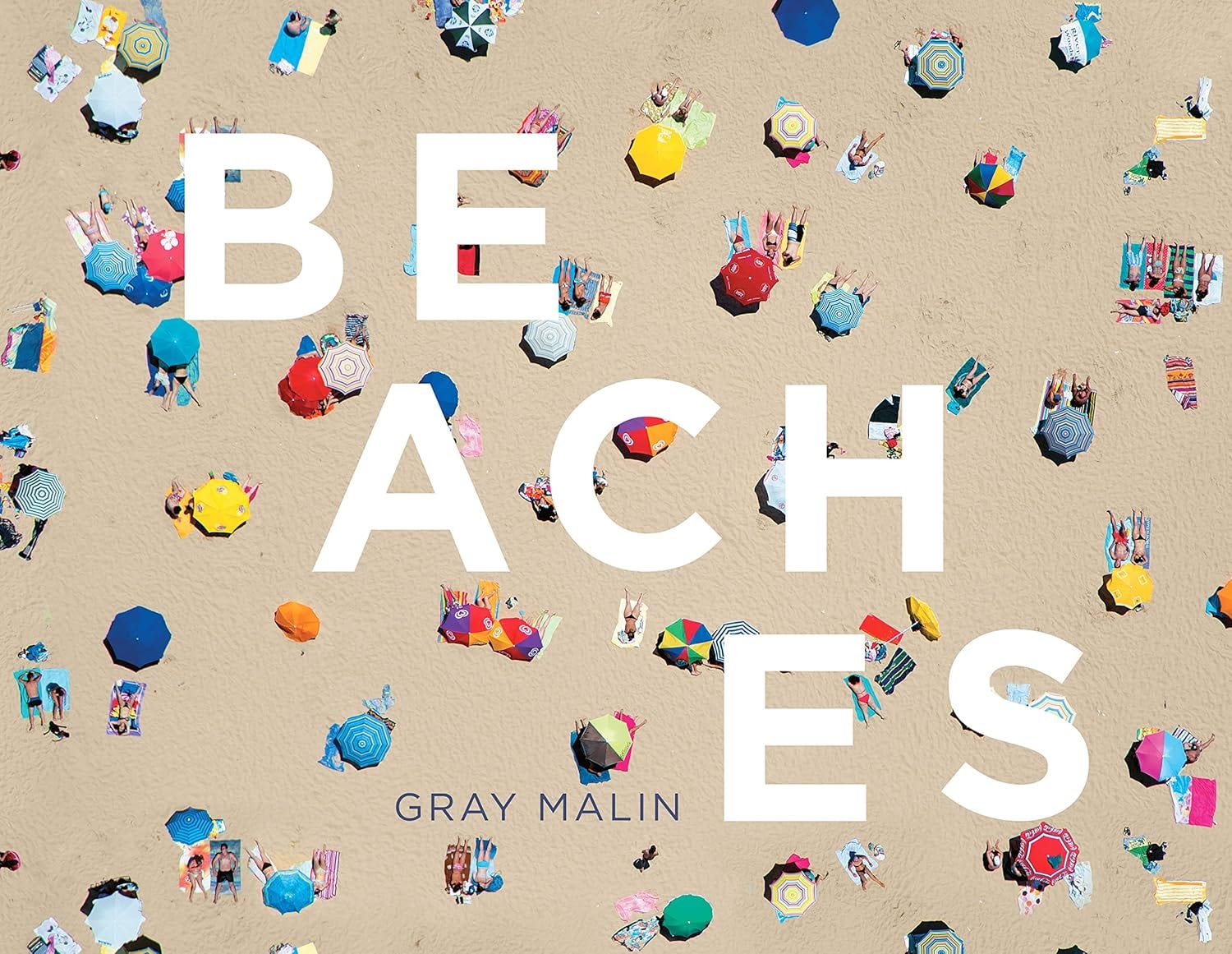
I really enjoy this unique little book. It’s almost ten years old, but still such a unique and interesting view of the beach community… as a layflat. heh.
Available at Amazon (Affil)
Another way to support my efforts here is to buy a book.
If you’re over 40 and still hungry to make, build, and create, stick around. This space is for people who aren’t done yet (and never will be). I’ve got five decades of wins, failures, comebacks, and creative battles under my belt, and I’m sharing everything that still works—and burning the rest.
No fluff.
No hustle porn.
Just real tools for building a creative life on your own damn terms.
