
The Reframe Series: Style
We don’t find our style in the work of others; we find it by watching how we make the images we love

I help photographers and creative entrepreneurs over 40 reclaim their confidence, cut through the noise, and build bold, independent lives through no-BS insight, experience, and action. Welcome to my Substack. I am glad you are here.
Reframe: Style
Today, I want to talk about the idea of style.
At some point, photographers start asking about style as if it’s something that must be found. It is something ethereal, difficult to pin down.
“I’m not sure what my style is,” they’ll say to anyone who is standing close enough to listen. At least it seems that way.
It’s a hot topic, and it goes along with, “I need to find a style.”
It’s a challenge we all face, and we generally make it harder than it has to be.
We’re constantly looking for our style, but, like looking for love, we may be looking in all the wrong places.
We believe style is elusive, waiting to be discovered in the perfect project, the ideal lighting setup, and the perfect blend of influence and inspiration.
A Leica.
Of a film camera.
Oh, I know, one of those 360 cameras will do it.
And once we discover it, everything will align perfectly.
Stars, ideas, love, money.
Yeah… that’s not how it works, Bucky.
So we look at other photographers’ work and think, “Well, I should do it that way; that looks like a cool style.”
So we shoot like them for a while.
Now you think you have a style.
But it isn’t yours.
It’s theirs.
We took theirs and made it ours, and ours is a cheap substitute for theirs.
Ours is a Temu style.
We will never find our own style by copying the style of another photographer. All we achieve is a cheap imitation of something better, and authentically someone elses.
I also want to be absolutely clear. YES, we must copy when we are starting out. One of my favorite quotes is by jazz trumpet player, Clark Terry, who said: “Imitate, assimilate, innovate.” It’s the learning process I believe works the best. But you must move on from imitate to innovate for it to give you the insight into your own vision. Too many get stuck on imitate, because it’s easy.
Then, for no particular reason at all, we discover another shooter… and the cycle starts again.
We end up shooting in someone else’s style, and we have none of our own.
We’ll call it being able to do many things.
We call it being open to all nuances.
We call it being flexible for clients.
We’ll say diversity is our strength.
And while those things may be important, they can also be a way to avoid being clear in our work or making our own statement of purpose.
I’ve done it myself.
In my commercial work, I wanted to be technically strong, compositionally safe, and, well, hirable. But if you swapped my images with a myriad of photographers in my genre, there would be no difference.
I brought the dish no one hated but no one took home.
I was both confused and frustrated. I seemingly had no discernible style, so all I could get were clients who didn’t need, or particularly want any style.
Sheets and towels for department stores.
Catalog photos of chatchka and table lamps.
Electronic components from Motorola.
(I shot the very first cellphone. I had to sign an NDA.)
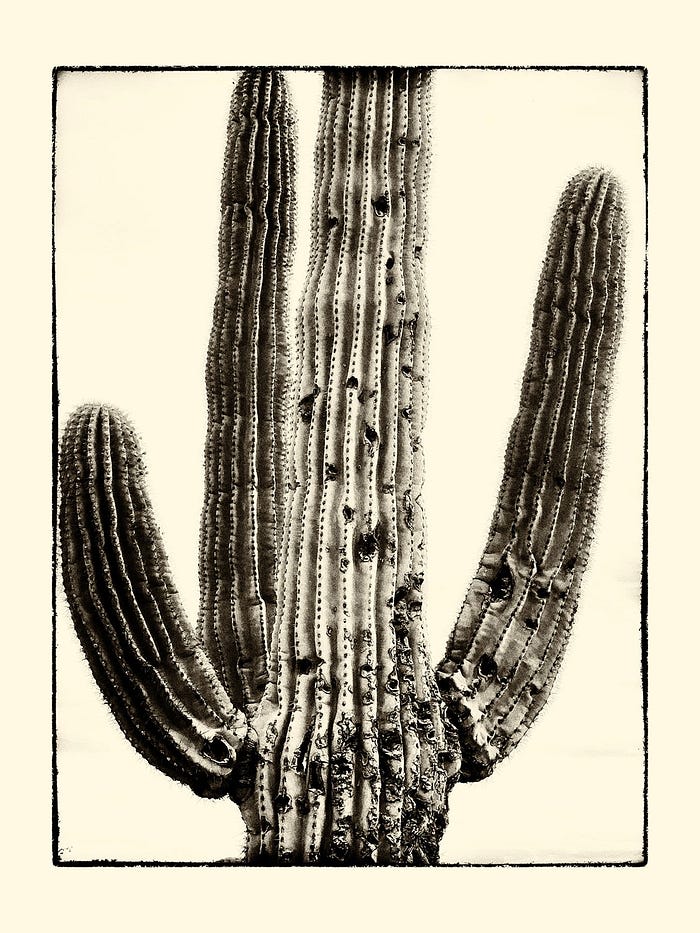
I started making images that I wouldn’t show in my book. I thought they were too quirky for commercial standards. Experimentation, odd subject matter, light that felt more like I saw it in my head than how I saw it in the Workbook.
I would make a print, put it in a drawer, and pull it out now and then. The images confused me. I liked them, and I didn’t really know why.
They didn’t look like everyone else’s.
(It took me a while to realize that wasn’t necessarily a bad thing.)
I remember one picture that I sat on for quite a while.
I really liked it, but it didn’t seem to work in my book.
It wasn’t commercial enough, I thought.
It didn’t fit in and just sat there being what it wanted to be.
And that made it difficult to share.
We didn’t have FB and InstaTok.
Once, after a particularly grueling shoot, I showed a few of them to an art director whom I greatly admired. He took his time and set them back down on the desk.
“Damn,” he said, “that’s really excellent work, man.”
We chatted for a while about the idea of style, how limiting beliefs can lead to stale art, and the need to be bold when showing the work you love.
His insight meant a lot coming from an award-winning artist, and I took it to heart.
We often avoid images that point directly at what we see differently.
Not better.
Not worse.
In a different way.
And that’s usually where style starts: Permission.
Permission to suck.
Permission to make bad work.
Permission to look like us, even though we may not be ready.
Permission to go right when everyone is going left.
We don’t find style by looking for it. We build it by letting things happen that we may not be in control of. By letting preferences show up over and over again until they don’t feel like accidents anymore.
Style is not something we find by looking forward, it is what we discover by looking back at what we have.
It’s a process that is slower than most folks want it to be.
That’s not a bug, it’s a feature.
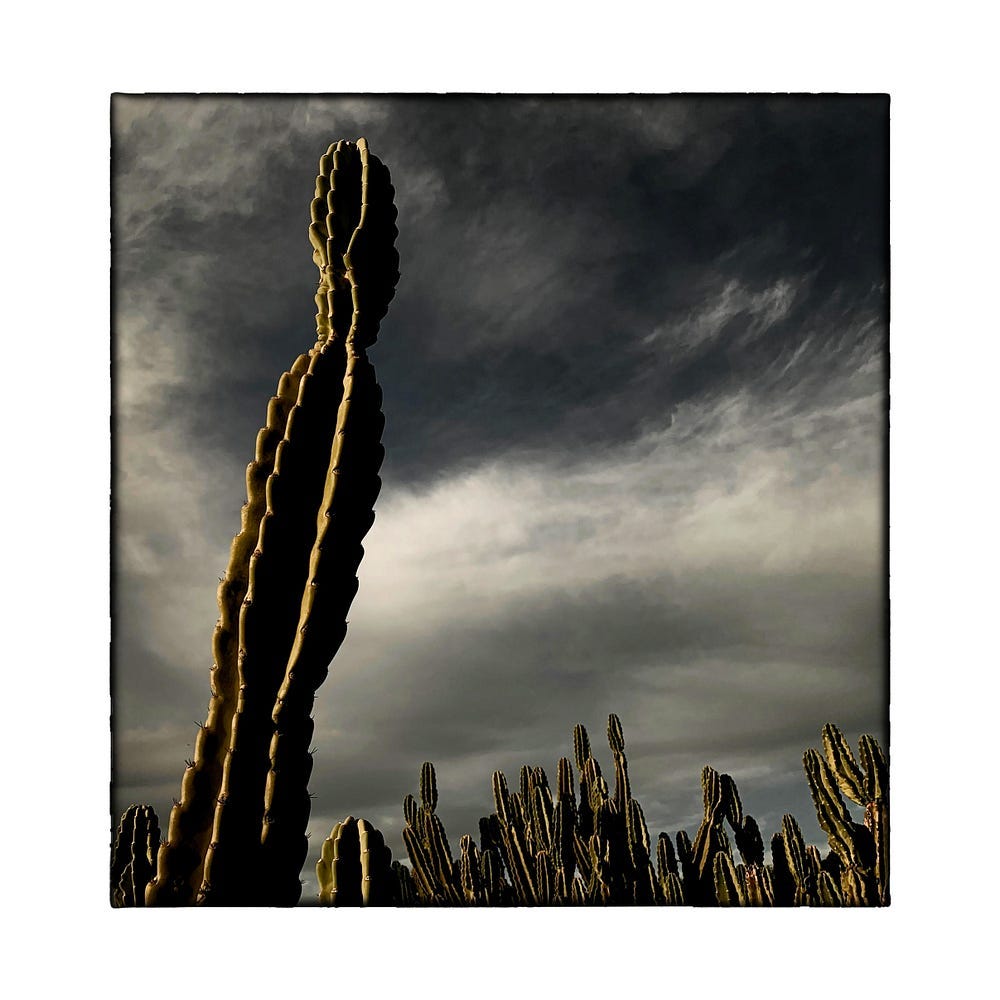
Developing style isn’t easy.
It’s not supposed to be.
Your style won’t announce itself one fine spring day with a box of chocolates and a shiny new mirrorless body.
It starts small.
It builds slowly.
It’s how we frame.
What we don’t include.
The moment we choose to snap.
We keep going back to it, even if we do not know why.
The colors that appeal to us.
Post-processing tweaks that make our work look like ours.
It’s in that image that makes you smile and feel connected to something deeper in your work.
And once you see it, you know it.
It is yours.
It’s in your style.
Most Photographers Don’t Need More Talent to Make Money, They Need a Smaller Target.
Too many photographers try to market:
weddings
portraits
fashion
products
branding
travel
landscapes
pets
drones
boudoir
‘creative content’
Which means clients have no clue what they actually do.
In my class starting this Saturday, we will help you knock this down to something clients actually understand. And that is the first part of creating a Commercial Photography Side Hustle.
narrow your focus
build a useful and strategic portfolio
become hireable
Small businesses hire specialists, not generalists, so let’s get you there.
(BTW, I guarantee your success. If you don’t make your money back on the course while in the course, I will keep working with you until you do.)
This is a hands-on class, with actionable steps to get your portfolio in shape, find your first client, and create a system for making images that pay.
Stop trying to be Costco in a world that loves boutiques.
Deborah Mercaldo had never shot tabletop before she took my workshop.
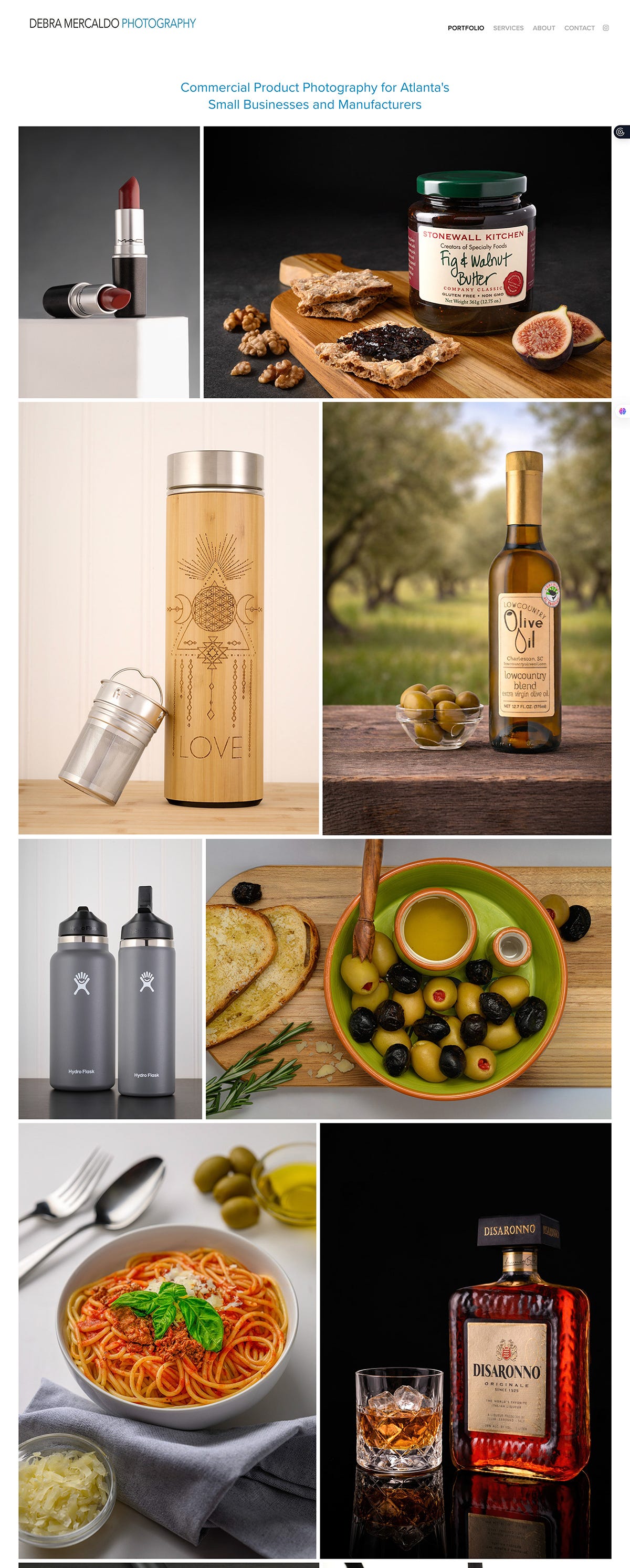
Deborah Mercaldo Photography, Atlanta
Have a great day!

If you’re over 40 and still hungry to make, build, and create, stick around. This space is for people who aren’t done yet (and never will be). I’ve got five decades of wins, failures, comebacks, and creative battles under my belt, and I’m sharing everything that still works—and burning the rest.
No fluff. No hustle porn.
Just real tools for building a creative life on your own damn terms.
My Personal Website
My Photography Website.
Me on Medium.
My premium members have full access to over 20 productivity and creativity tools, my books, and weekly updates to help them build a better creative business.
The newest tool for photographers is live and working now.
The Style Builder Tool helps you create a .md file to help AI tools be more personalized for you.
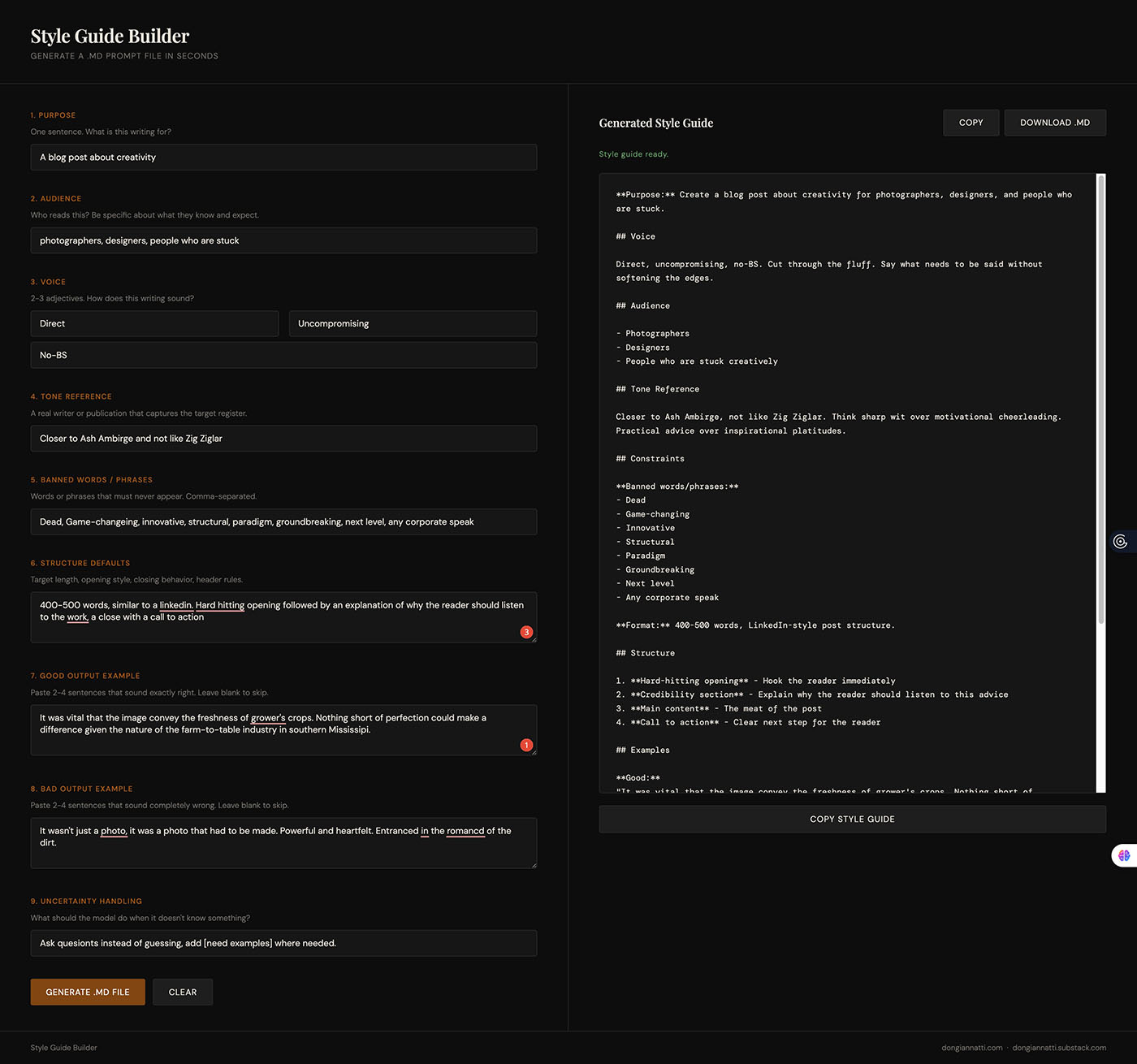
Premium Members will find this tool in the Tools Section (in the nav bar above).
Style Guide Builder
What It Does
The tool walks you through nine questions and produces a .md file. That’s a plain text document you paste at the start of any AI writing session.
Think of it as a contract between you and the AI.
Before the model writes a single word, it knows your purpose, your audience, your voice, and what it must never do. (Oh, it still does them on occasion, but the editing you have to do is cut considerably.)
We do that by answering a set of questions that explains to the AI exactly who you are, what you do, who you are doing it for, what their expectations are, and what you want it to do.
The tool asks questions that cover the things that actually determine whether AI output is usable or just slop that’s flagged by most human brains as fake.